
The "Listening Route"
Some context comes from years in a noisy, smelly, three-dimensional world that hasn't (yet) been digitized.

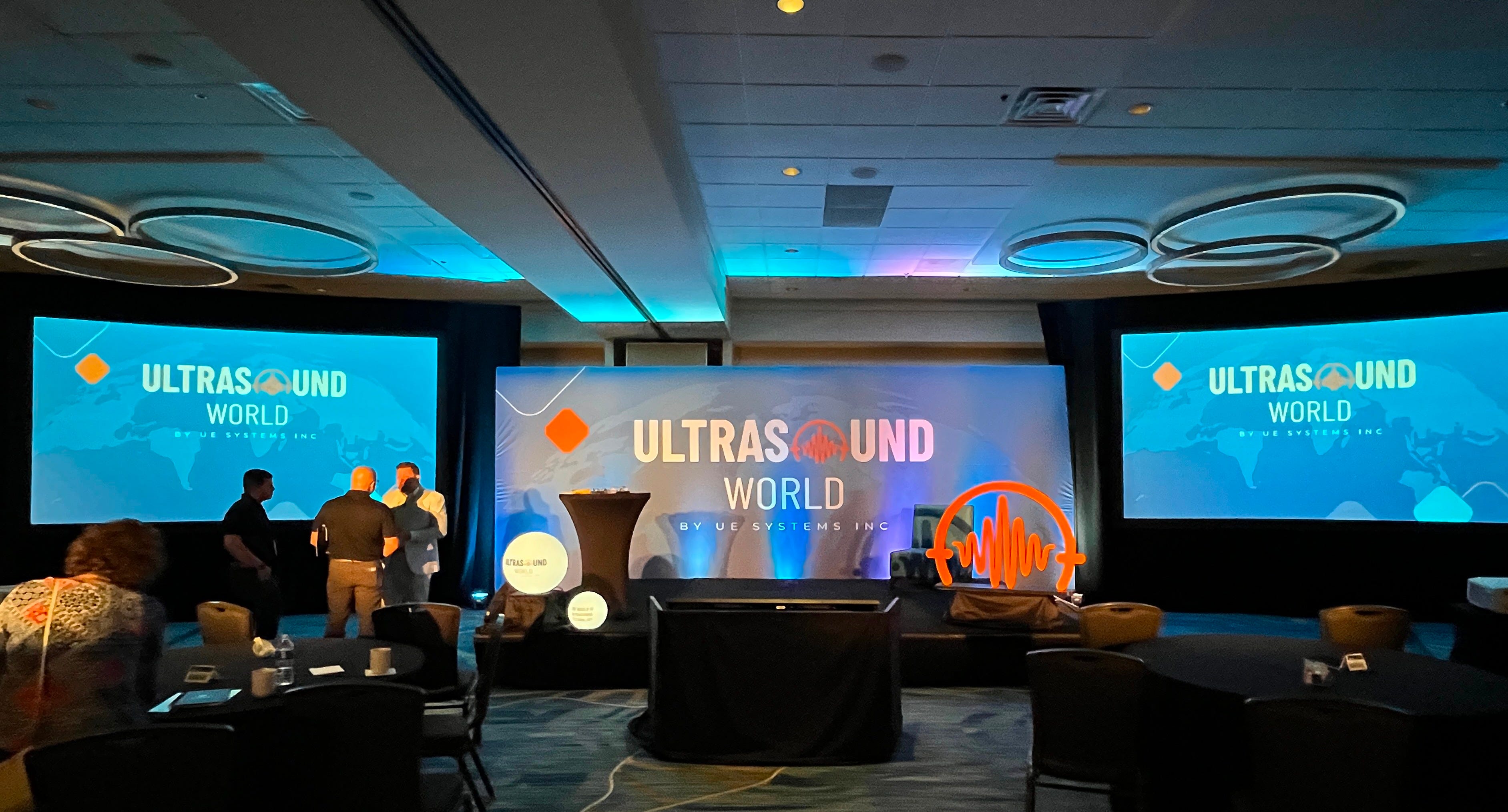
I had the pleasure of attending Ultrasound World 2026 last week. It was a great mix of maintenance engineers and managers, field and factory technicians, vibration analysts, IoT technologists and even a few software people.
One new concept I took away was called a “listening route”.
In the context of industrial machinery, a “listening route” is when a maintenance pro walks around a factory floor and “hears something weird” in the overall (some might say) cacophony of rotating equipment noise they’ve attuned themselves to over years maintaining a facility. This is often the first step in discovering a problem with a machine that is or could soon be bringing down production.
Today, state-of-the-art industrial facilities have implemented proactive maintenance solutions to monitor, analyze, and act autonomously on sensor data they gather from their equipment, whether that be ultrasound, noise, vibration & harshness (NVH), or any number of other physical signals like temperature, humidity, EMI, etc) they can effectively capture. They develop and apply machine learning models to predict failures and, in some cases, deploy fixes (e.g. auto-apply lubrication to a machine bearing).
But what these solutions really attempt to do is reproduce the insight that a listening route can provide, and allow it to be gathered consistently 24/7/365. We can start to see why it’s a long road from reactive => preventative => predictive => proactive maintenance for many companies, though, when we look closer at what it takes to reproduce this insight.
Doing this at scale takes sensors, secure data pipelines, labeled training data, ML engineers, and product owners to design the workflows, plus a pilot to justify the pilot. It’s a journey, not an event.
Humans Still Walk The Floor
Organizations that lag in adoption of modern predictive maintenance practices have been able to survive because of the human professionals capable of walking these “listening routes”.
How? The context gap.
These pros have the domain knowledge, experience, and relevant environmental context to interpret what they hear and know what actions to take. They can hear (if almost subconsciously) tiny changes amongst a sea of what would be harmonic chaos at first listen by anyone else. Their brains have developed the ability to “hear something weird” within a learned baseline of seemingly random (but definitely not) uniform noise.
Think about what “context” experts use to understand the world. It’s what they hear, smell, touch, see and taste through their senses. It’s the associations of those collective inputs with their past experiences, knowledge, memory, and beliefs. They know how it smelled the last time it sounded weird when they saw the blue LED on the control panel blinking at what seemed like about 1 hertz.
For a maintenance pro, developing this ability happens implicitly through years of experience and practice in the trade and environment. They’ve essentially trained a proprietary prediction model in their brain by synthesizing years of raw, multi-modal data, gathered through their own senses, along with their knowledge of the machines, the environment, the weekend of overtime spent searching for what ended up being one fried capacitor that caused a cascade of failures that brought the whole line down.
Could an AI system give an equal or better result given the same context as the human? Yes, very likely. But how do you practically digitize all the context gathered and synthesized by a human with decades of working experience and memory, and then feed it to a model effectively? How do you know what context will be relevant? How much will it cost?
And look, with enough audio data, you could build an AI model to “out-predict” a pro doing a listening route. But what happens when that same human pro “smells something weird”? Did you even have a gas detection sensor set up to capture the smell? Did you architect a multi-modal model to incorporate the way the smell of melted plastic strain-relief correlates to machine downtime events?1
The point is not to make a case against modernizing your predictive maintenance program or a case against “AI”. It’s incredible what these systems are becoming capable of and the costs to stand them up are trending down over time.
However, we shouldn’t undervalue the incredible capacity of the human brain to consume huge amounts of raw data and apply pattern matching, adaptive learning, reasoning, and problem- solving techniques, especially when equipped with decades of experience and contextual understanding of a problem space.
The context gap between a human expert and AI tools for generalized hypotheticals has narrowed rapidly, but for specific scenarios in the real world, the amount of context a human has relative to an AI system is enormous, even when you spend significant time and capital to provide your AI with more data. The bigger the context gap, the more likely the performance-to-cost calculus still favors human expert involvement.
If the economics for implementing a completely automated predictive maintenance solution were a slam dunk across the board, we’d have seen much faster adoption across more industries. This suggests how much value these maintenance professionals are delivering in the market. These folks can compete against multi-million dollar fully autonomous predictive maintenance solutions and win on cost, reliability, and trust, despite the human limitations of needing pay, benefits, sleep, PTO, respect, etc.
And they aren’t standing still technologically, either. For example, a human pro can’t hear ultrasound (hence, the name), so they’ll use hand-held or mounted ultrasound probes to as their own super-human sense augmentation and enhance their internal data set with technology as well. Their domain knowledge informs where they point those probes and what they make of the measurements.
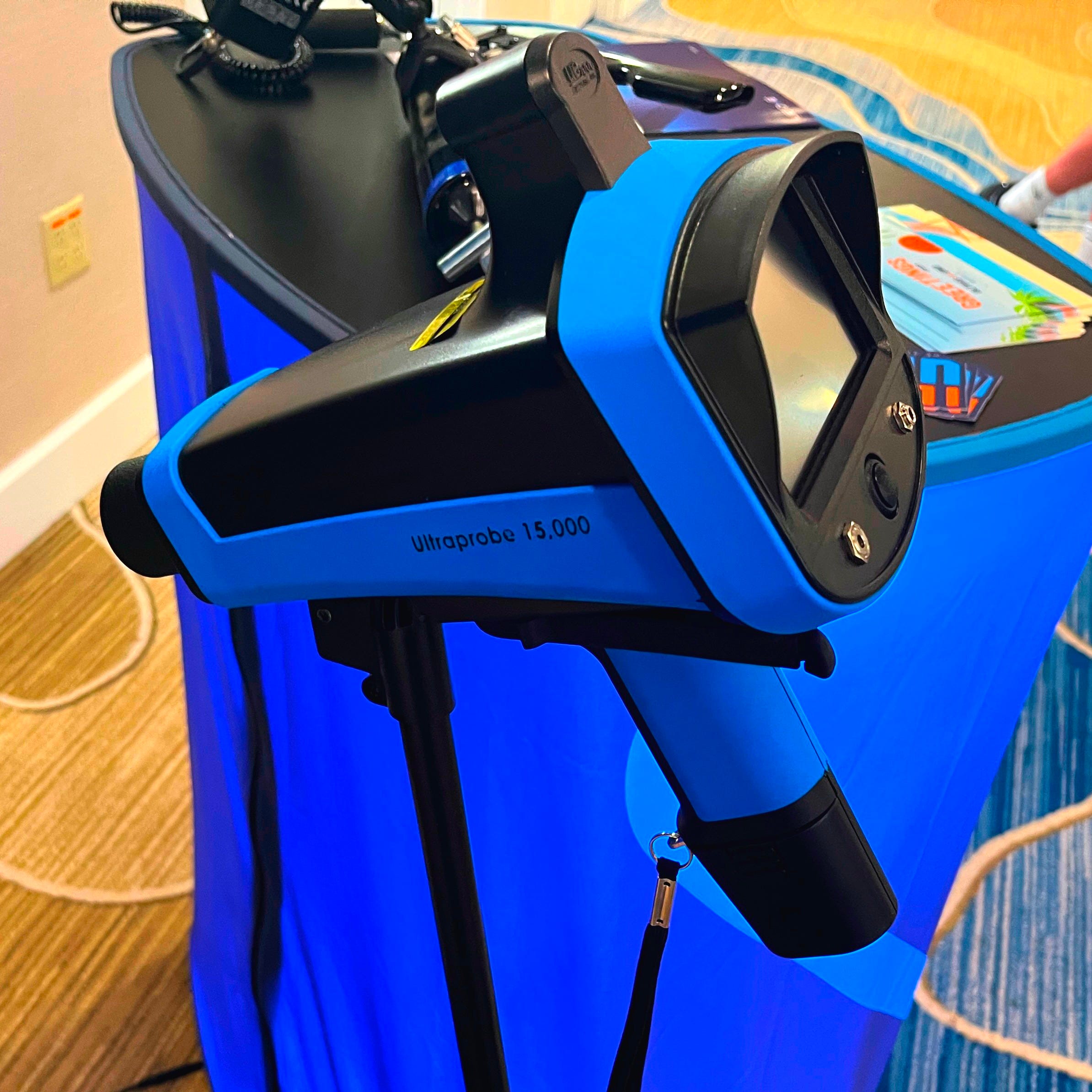
UE Systems Ultraprobe 15,000 Handheld Ultrasound Probe
The best-positioned maintenance engineers in the market are those that find where technology solutions allow them to create significantly more value for their organizations and have the business savvy to align their leadership with that vision. They marshal the needed investment for implementation and operation. They’re the ones asking, “how could technology enable me to ‘walk’ my listening route at all our facilities worldwide from my home office”?
What’s your “listening route”?
Regardless of the industry you’re in, consider the expertise and experience required to develop it. Consider the context you incorporated into your work as you developed that expertise. What context do you have that doesn’t have an API endpoint? What relationships matter that aren’t formally documented anywhere? What process do you follow that’s notoriously hard to digitize? What did you smell that led you to the problem that sparked a novel solution? What kind of intuitions have you developed in your domain? What’s your “listening route”?
This is your competitive moat as a human being in the AI economy.
I’m genuinely curious about AI research into the olfactory system, but I’m going to save it for another time.